Holy Friday: Zizyphus Spina Christi

In my suitcase returning from my three weeks in the Holy Land is a branch from a tree growing in the ruins of the city of Chorizim.  Wrapped in toilet paper from the Convent of the Rosary Sisters in Nazareth to keep it safe during my travels, it is one of my prized souvenirs from that pilgrimage.
Chorizim was a city situated on the northern side of the Sea of Galilee. It is a city where Jesus performed miracles but he then cursed because those miracles did not change the hearts of the people (Luke 10. 12–14).

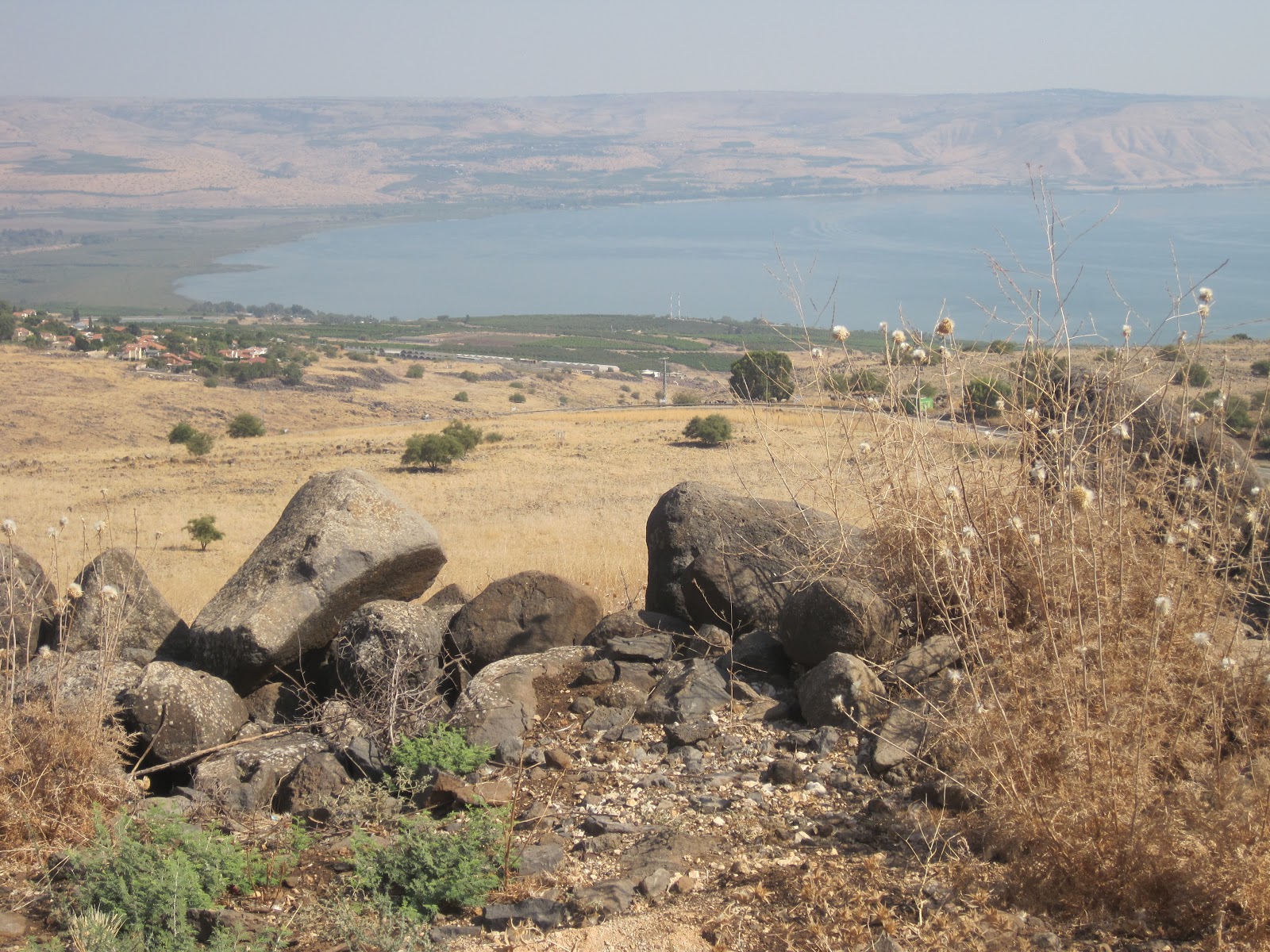
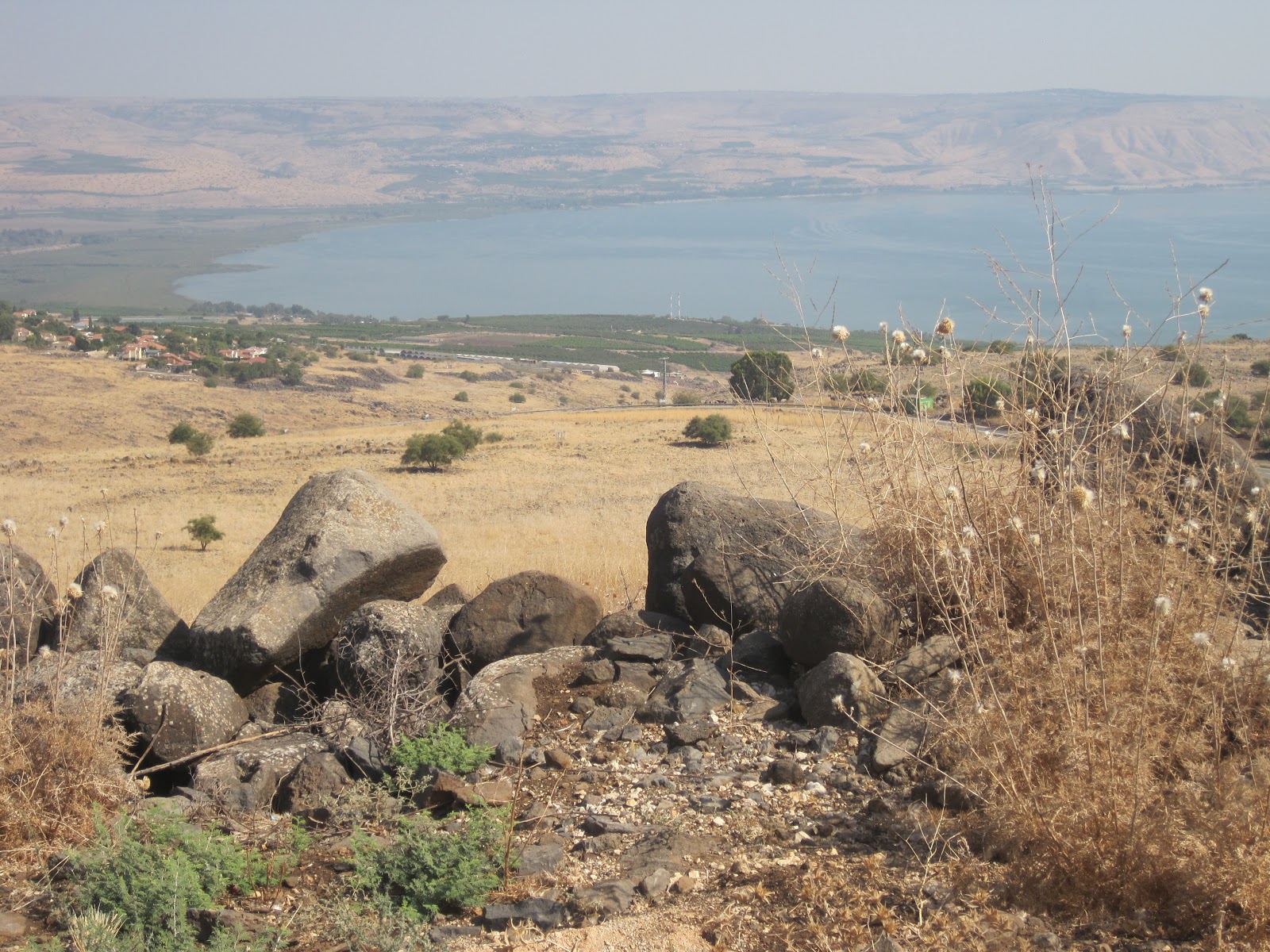
The city was stark that hot September day when my brother and I explored the ruins.  The rocks used to build the city were black basalt, and most of the plants had dried to the beige and brown of late summer.  Among the few green plants growing was a tree, zizyphus spina christi.  An evergreen, it has edible fruits which taste much like dates.  In fact, from other trees of the genus, the small red fruit is used to make the candy, jujubes.
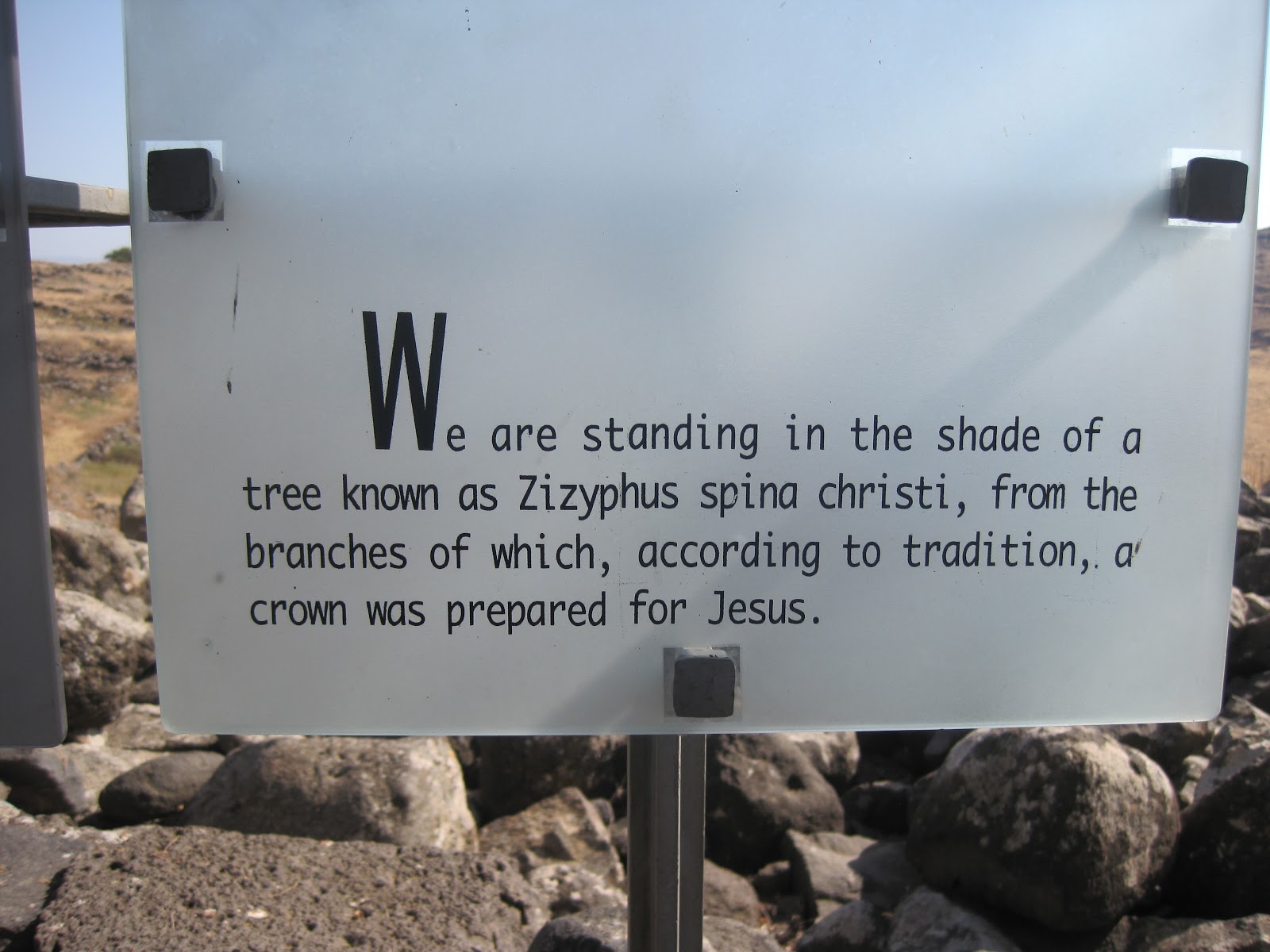
This green tree in the midst of ruins had a not so good surprise.  Small thorns covered the branches which one did not see until touching a branch and being pricked.  In Chorizim, this genus of the buckthorn family is spina christi.  Many think that it was the branches from this tree that were used to make the crown of thorns that Jesus wore to his death.
On this Holy Friday at our noonday service we will read the passion narrative from the nineteenth chapter of the Gospel of John.

Then Pilate took Jesus and had him flogged. 2 The soldiers twisted together a crown of thorns and put it on his head. They clothed him in a purple robe 3 and went up to him again and again, saying, “Hail, king of the Jews!” And they slapped him in the face.4 Once more Pilate came out and said to the Jews gathered there, “Look, I am bringing him out to you to let you know that I find no basis for a charge against him.” 5 When Jesus came out wearing the crown of thorns and the purple robe, Pilate said to them, “Here is the man!”6 As soon as the chief priests and their officials saw him, they shouted, “Crucify! Crucify!” 

I am thoughtful about this crown of thorns placed on Jesus’ head.  It would have looked harmless as the soldiers brought it towards him and lifted it to his head.  It was only when the crown was placed that the pain from it began.

As people, we are often somewhat prepared for the pain and suffering we experience in life.  It is those unexpected hurts that blindsight us and that can cause ache to our very soul.  

On that Friday in Jerusalem that is now called Good, Jesus knew that he was going to be betrayed, denied, abandoned, ridiculed, and crucified.  For this pain he was as prepared as one could be, particularly by his vigil of prayer the night before in the Garden of Gethsamene.  

But the pain of these tiny, nearly invisible thorns was unexpected.  

On this Holy, this Good, Friday, may we be especially be aware of those small, often unplanned, hurts that we each cause.  May we remember that as Jesus dies on the cross, his hands are open wide to receive and give absolution for all of those things we do that cause others pain.  As we are forgiven, may we extend our hands only in love to all of those we meet.

O Christ, who by the thorns pressed upon your head has drawn the thorns from the sorrows of the world, and has given us a crown of joy and peace:  Make us so bold to never fear suffering, nor to suffer without relying on your love and care, to the glory of your holy name.  AMEN

Holy Thursday: The back story

It wasn’t the first time that the disciples had seen feet washed that night of their last meal with Jesus.  Certainly, it was the custom for a servant to wash one’s feet, made dirty through walking on dusty roads, before one ate a meal. Certainly, it was most unusual for feet to be washed during a meal, and to be washed by the host or leader.

I wonder if Jesus’ actions during the last meal with his disciples, after which he would be betrayed and arrested, were inspired by an event that the gospel writer said took place a week or so before.

According to John’s gospel, eight days before the Passover, Jesus was in Bethany eating with his disciples in the home of his dear friends Lazarus, Martha, and Mary.  It is during that meal that Mary takes costly perfume and anoints Jesus’ feet, then dries his feet with her hair.  The perfume of the oil fills the room. I wonder if as Jesus pondered this humble action, this generous gift, that he was struck with the deep devotion and servanthood of Mary.

I wonder that at the meal a week or so later, that last meal with his disciples, that Jesus spied the basin and pitcher and towel set out in the corner of the room where they were eating, ready for foot washing, basic good manners in a Jewish home. Maybe their feet had already been washed by a servant.  Whatever the case, I wonder if Jesus, seeing the props for washing feet, remembered Mary washing his feet just days before.  I wonder if he remembered the devotion and love in that humble yet generous act.  I wonder if remembering the act of pure love and kindness Mary had bestowed on him that he was then moved to share that same kind of love and devotion with his own beloved disciples.

I wonder.

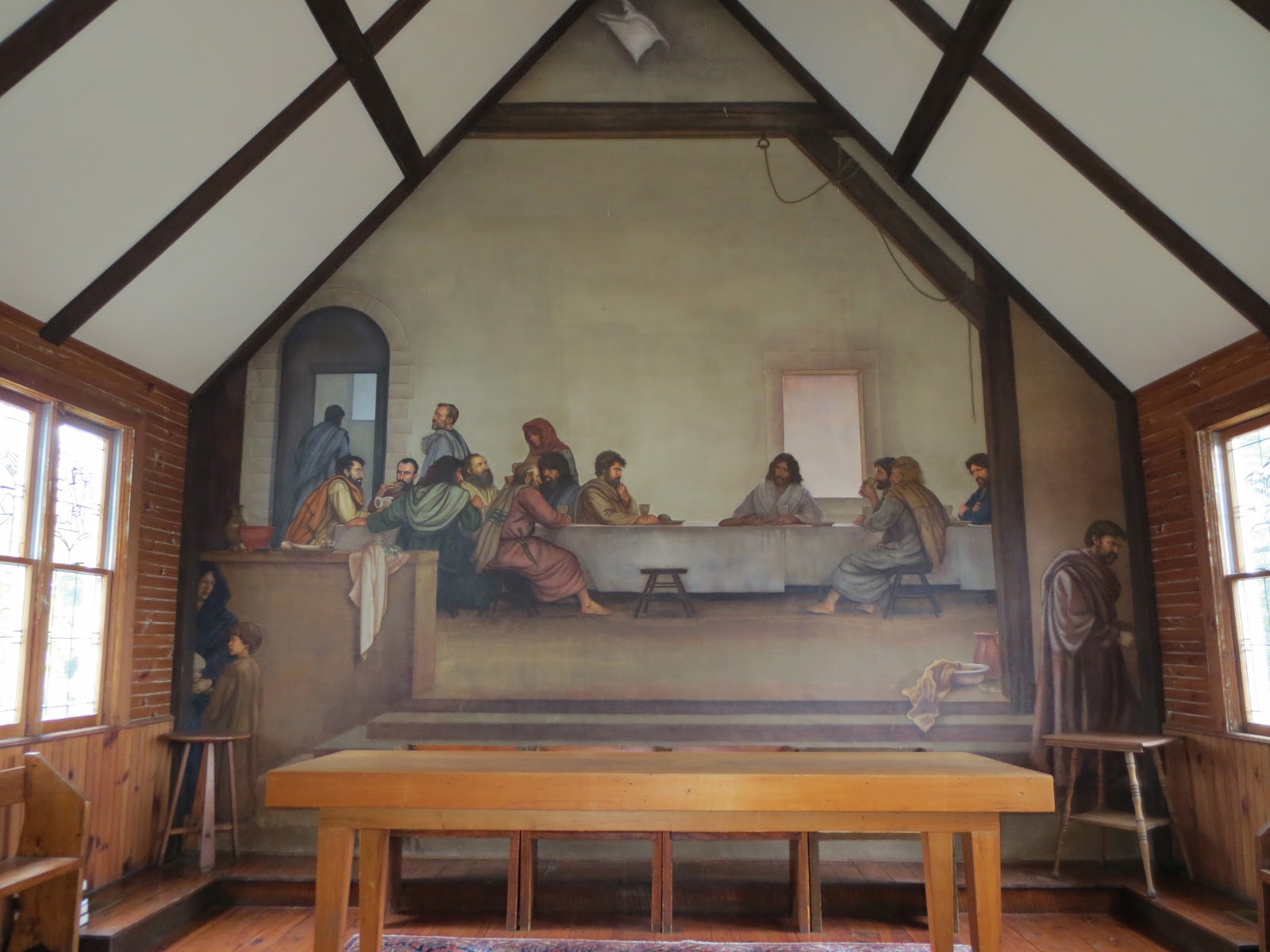
There is a church in North Carolina that has an extraordinary fresco behind the altar.  The fresco takes up the whole back wall, and the altar appears to be an extension of the fresco.  In it we see Jesus with the twelve.  We see a basin and bowl with a towel draped as if it had been used.  Eleven of the twelve are seated at the table with Jesus; we only see the back of another disciple as he goes out of the door (Judas?).  We also see a woman serving at the table, another woman to the side with two children, and one more man at the edge of the fresco who appears to be walking away.

Which made me wonder about another back story of that last meal.  Who set up for the meal?  Who baked the bread?  Who made the wine and who brought it?  Who cleaned up afterwards?  Would there have been a last meal without their service?

Wondering about Mary and all of the other nameless, faceless folks that made that last meal with Jesus possible, I wonder about all of the other backstories of the Gospel–all of those many actions in Jesus’ life that we honor and celebrate that might not have happened without ordinary folk saying yes to serve, going all of the way back to the yeses of his mother and father.

It seems that on this Holy Thursday we have the opportunity to ponder the mostly anonymous back stories that made Jesus’ birth, life, death, and resurrection possible.  We also have the opportunity to ponder who we are still in Jesus’ back story today, in the way that we serve with love, particularly in response to the love and service we have received.

How are we Jesus’ back story?  How are we to be Jesus’ back story?

Holy Wednesday: Ceasing to Work

One of things that was always getting Jesus into trouble was the way he kept–and didn’t keep–the Sabbath. The Biblical literalists had so many applications for how they understood the Torah that God’s original intent had been too often lost. When Jesus came to be one of us, time and again he lived to show us the Truth of God’s love. He healed on the Sabbath and picked grain on the Sabbath and showed us what the law of Love was truly like.

Truth is, keeping Sabbath today gets us into trouble, too. We are respected for all that we do and accomplish, and we don’t get promotions or awards this side of heaven for ceasing to work once a week.  But doing so is what God says is holy, and when we choose to give one day each week back to God’s care and to cease to be in charge, we are actually being honoring God.

This is the eve of the Triduum–those three days of worship that are the grand conclusion of Lent and Holy Week, and I have chosen to keep a Sabbath.  For twenty four hours, I will intrust my work to God.  Granted, I worked at the church until nearly ten last night in order to be able to have a Sabbath today; there were things that were left undone, and I will take them back first thing tomorrow.

Today I slept late.  I read the paper.  I had some lovely prayer and reading time in my prayer chair.  I’ll cook a good dinner.  I’ll work in the yard.  I won’t check my work email.

Tomorrow is Maundy Thursday and I’m back to work–hearing the Reconciliation of a Penitent, finishing the Maundy Thursday sermon, hiring a new staff person, tending to some pastoral needs, doing some final last minute Good Friday and Easter planning.

But not today.  It’s my day to walk with God in the garden.

I pray that all who read this will find a place of Sabbath this Holy Week.  It’s good to be rested before we go on that difficult journey with Christ to the cross.

Tuesday: Full of Light

St. Patrick’s Episcopal, North Carolina

Jesus said to them, “The light is with you for a little longer. Walk while you have the light, so that the darkness may not overtake you. If you walk in the darkness, you do not know where you are going. While you have the light, believe in the light, so that you may become children of light.” 
 John 12. 35–36

This is the Gospel appointed for today, Holy Tuesday.  Someone asked me this morning how my Holy Week was going.  I told them that it felt like I was in the busy-ness of Jerusalem walking with Jesus as he carried his cross.  It feels like there is a whirlwind around me of voices, needs, distractions, and it’s harder than easier to remember that today is not about the busy-ness but about the Jesus.
Granted, there are fires to put out (thankfully, not literally at this point).  There are worship leaflets to be proofed; there are words to be written; there are pastoral situations where I want to provide care.  There are phone calls to be made and returned; there are staff concerns to tend.  I am grateful that I have aplace to serve God where I am needed and valued, but it’s a lot of noise all about me.

Church of the Incarnation, Bethlehem

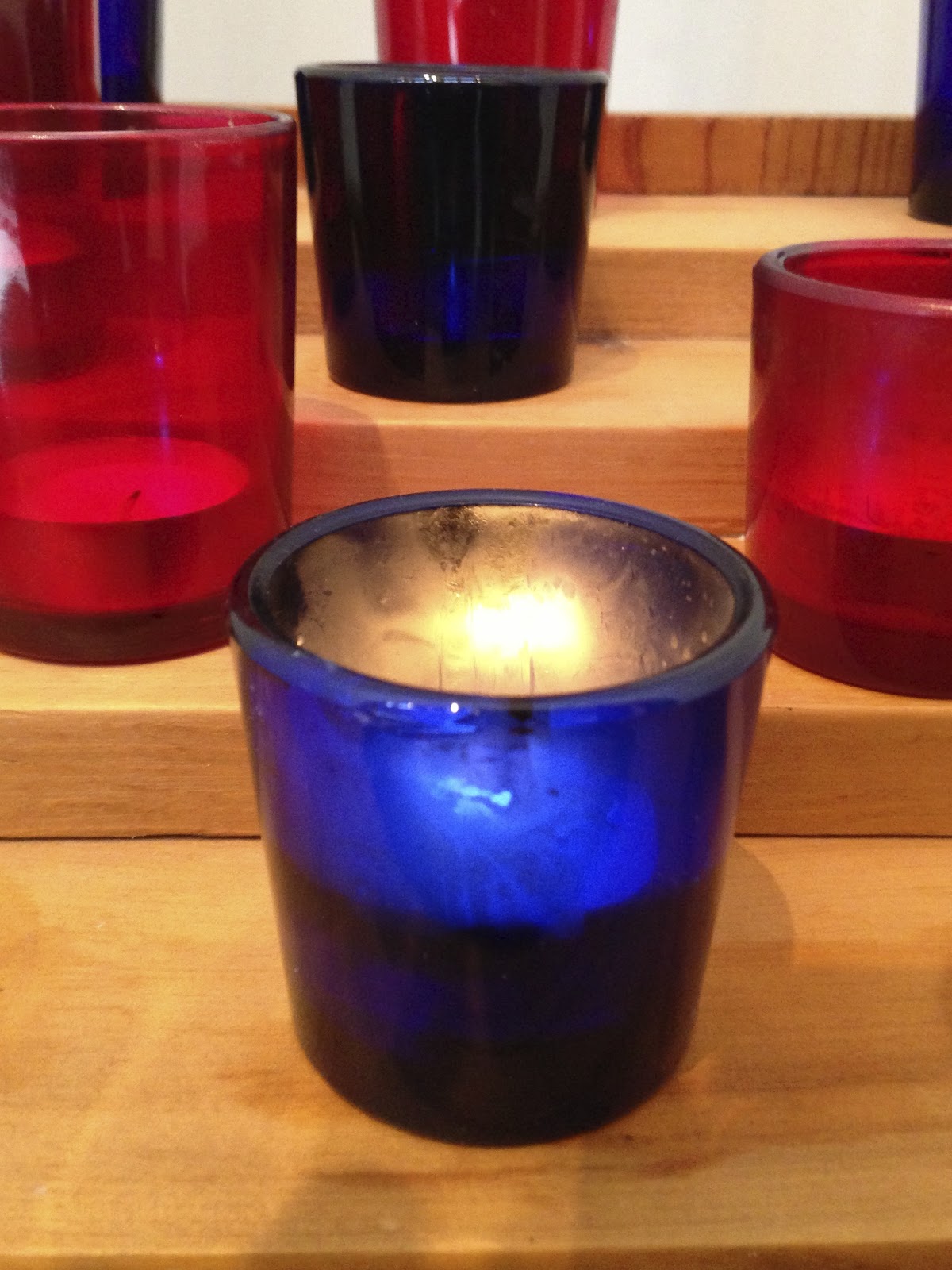
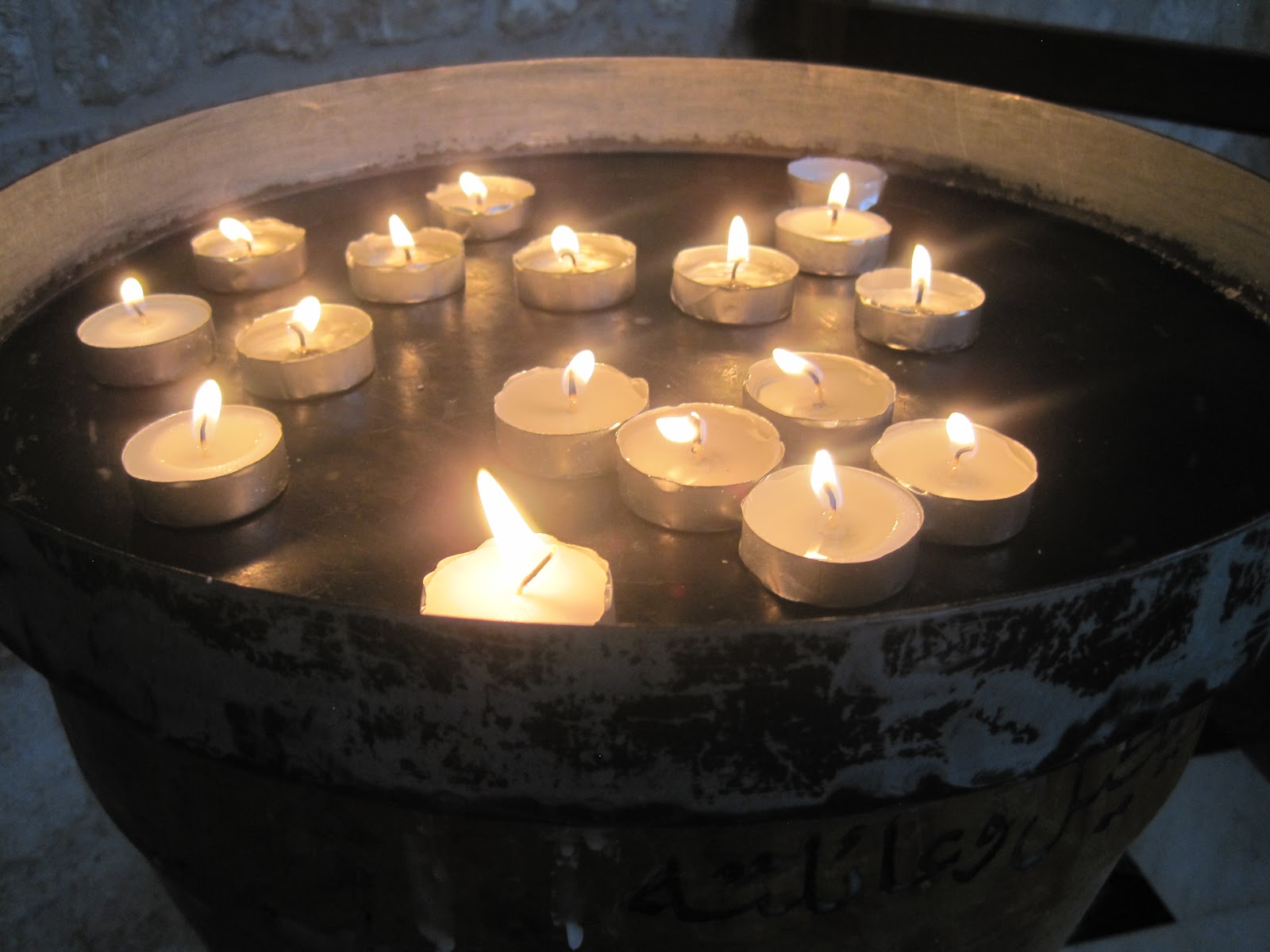
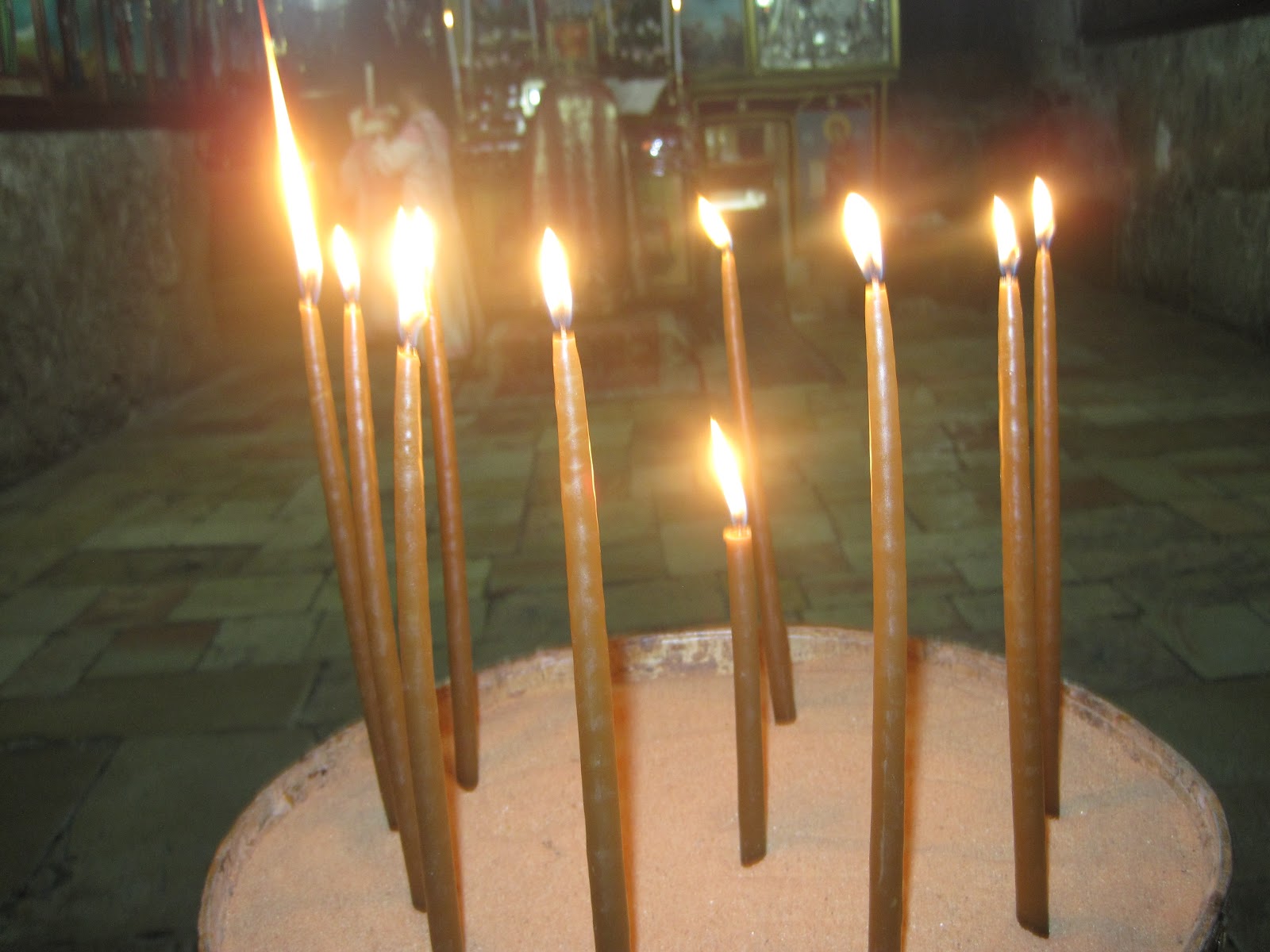
Then I remember the light.  When I was on Sabbatical, into almost every church or holy place I went, I lit candles and prayed for one person or another, one group or another.  I lit candles in Israel, Jordan, England, and Scotland as well as several different states.  Each of those candles reminded me of the Light that is always with us.  
As I look out my window, the world is full of light.   It’s one of those perfect spring days.  It’s as if the Holy Spirit has lit one huge candle of love and joy.
In the midst of all that surrounds, I can hold that Light in my heart. Holding that Light, I can walk fully present with Christ.  Maybe by being more aware of that Light, I’ll be able to share that Light with someone who is only seeing the darkness.  And Jesus has told us, that whenever we give to someone else, we give to him.  Seeing his light, I have something to share.  Sharing his light with someone else, I have in fact shared the light with him.   Not a bad way at all to walk with Jesus on the way to the cross this Holy Tuesday.


Church of the Sepulcher of St. Mary, Mount of Olives, Jerusalem